Japanese refers to the language, culture, and people of Japan, which is an island country located in East Asia. Japanese is the official language of Japan and is spoken by approximately 128 million people worldwide. It is a member of the Japonic language family and is characterized by a complex writing system that includes three scripts: kanji (Chinese characters), hiragana, and katakana (two syllabic scripts). The Japanese culture is known for its distinctive art, cuisine, fashion, and traditions, and has had a significant impact on global popular culture.
The examination body for Japanese language proficiency is the Japan Foundation and the Japan Educational Exchanges and Services (JEES). They jointly administer the Japanese Language Proficiency Test (JLPT), which is a standardized test to measure and certify the Japanese language proficiency of non-native speakers.
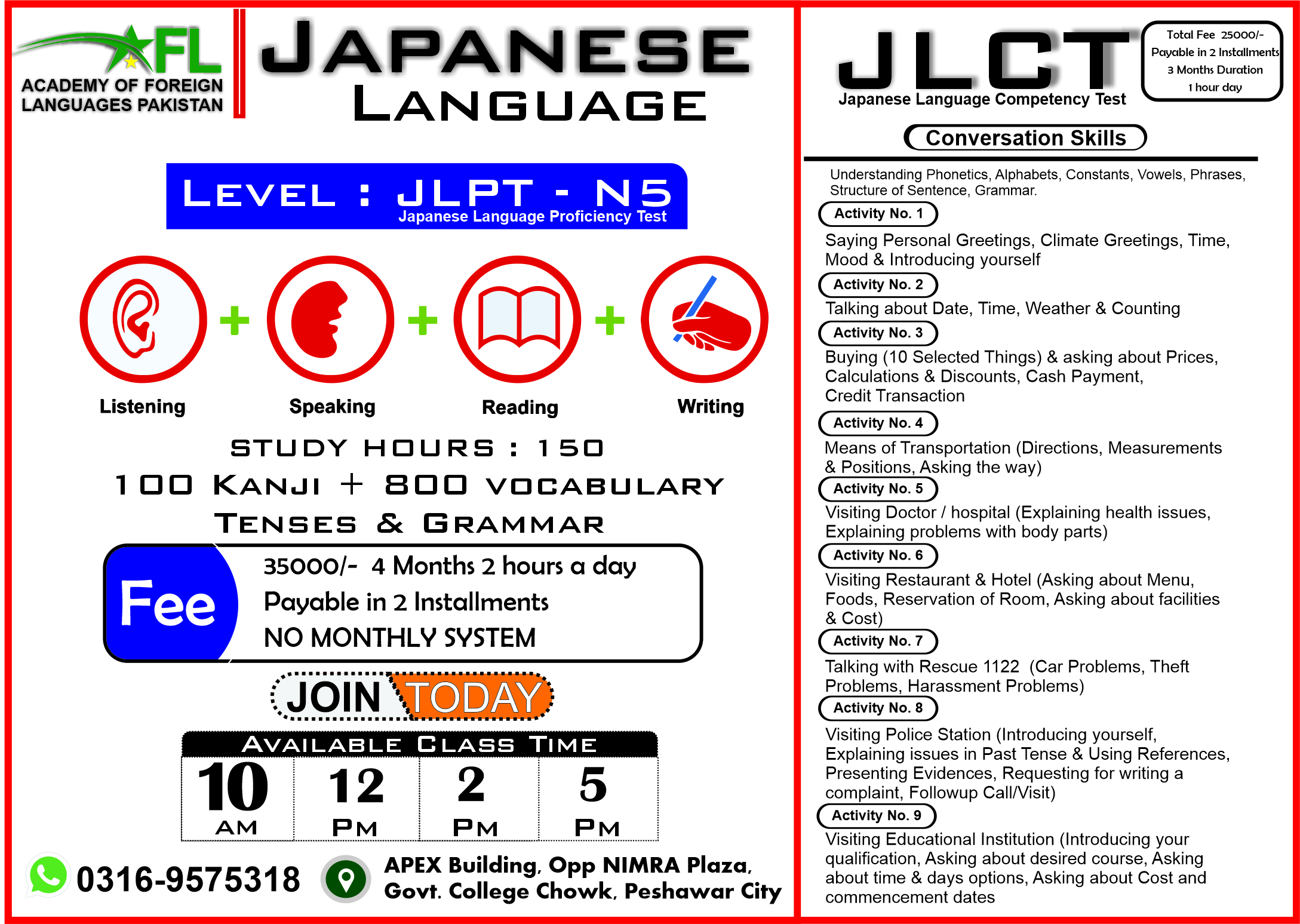
The JLPT consists of five levels, from N5 (beginner) to N1 (advanced). The test assesses the test-takers’ abilities in reading, listening, and grammar/vocabulary.
Apart from JLPT, there are other proficiency tests and certifications for Japanese language learners, such as the Business Japanese Proficiency Test (BJT) and the Examination for Japanese University Admission for International Students (EJU). These tests are also administered by the Japan Foundation and JEES

- The Japanese Language Proficiency Test (JLPT): The JLPT is a standardized test that assesses the Japanese language proficiency of non-native speakers. It consists of five levels, from N5 (beginner) to N1 (advanced).
- The Business Japanese Proficiency Test (BJT): The BJT is a test designed for individuals who need to use Japanese in a business setting. It measures proficiency in reading, listening, and speaking skills related to business communication.
- The Examination for Japanese University Admission for International Students (EJU): The EJU is a standardized test that assesses the academic abilities of international students who wish to study at Japanese universities.
- The Test of Practical Japanese (J.TEST): The J.TEST is a test that evaluates practical Japanese skills in various contexts, such as daily life, business, and academic settings.
- The Test of English for International Communication (TOEIC): The TOEIC is a test that evaluates English proficiency in a business setting. While not specifically for Japanese, it is often used as a requirement for Japanese companies looking to hire non-native speakers.
- The Test of Competence in Computer Skills (TCC): The TCC is a test that evaluates computer skills, including Japanese language input and output.
- The Japanese-Language NAT-TEST: The NAT-TEST is a test designed for non-native speakers who wish to study in Japanese universities or work in Japan. It measures proficiency in listening, reading, and grammar.